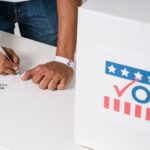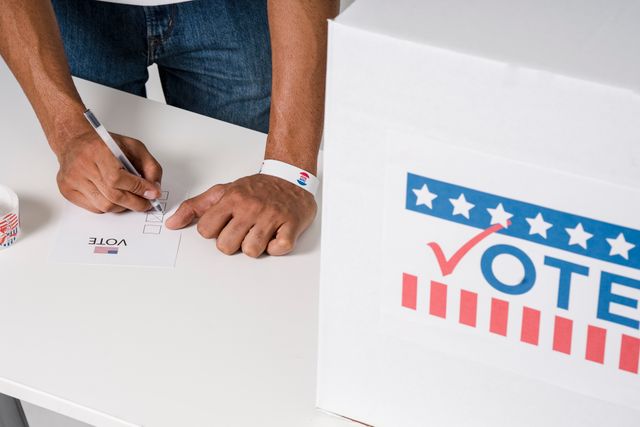
LOS ANGELES, November 4, 2026 – Imagine an election night volunteer checking on the voting results at 11 P.M., seeing the Republican candidate comfortably ahead. On Friday, the lead has narrowed. By the next week, it’s vanished. There’s no conspiracy at work; California is just slow at counting.
It’s called the “red mirage,” and its counterpart, the “blue shift,” in political circles. Ryan Sabalow of CalMatters explains on November 2 in his article about the phenomenon of how the early returns in the competitive races in California favor the Republicans until it becomes skewed towards the Democrats as the count continues. It’s not a recent occurrence; in 2018, there were four Republican candidates for the House who seemed like winners but turned out to have lost. This June, Republican Spencer Pratt was ahead in the early results in the race for Los Angeles mayor against Nithya Raman, who ended up winning to go against Mayor Karen Bass; and President Trump called the results “rigged.”
So what’s actually going on?
One reason for this is the sheer number. California has 23 million registered voters, with LA County having almost 6 million all by itself. Then there is timing, as according to CalMatters, Republicans who are competing in the June mayoral election were returning their ballots sooner than the Democrats, whose supporters were waiting for a crowded field in the governor’s race.
And then there’s the voting system itself. All registered voters receive mail ballots, which take more time to count than any votes cast in person. Any ballots that are postmarked on Election Day can be counted up to seven days after the vote. The voters who had problems signing them get the country’s longest period to fix them until Thanksgiving this year. Only six hours of counting per day are allowed in counties, and there is no obligation to count on weekends and holidays. They have 30 days to certify.
Officials say that’s by design. The Secretary of State’s office explained in June that counties, not the state, process the ballots, and that California puts election security ahead of speed. You can follow progress on the state’s unprocessed ballots report.
Here’s where it gets contentious. Democrat Secretary of State Shirley Weber said in an interview with CalMatters during spring that accuracy is much more important than timeliness, and that usually the results are predetermined well before the moment of certification. His Republican opponent, Orange County Supervisor Don Wagner, contended that the very timeline of the process damages public trust. He said that he will be supportive of measures to scrap universal mail ballots and to push up the certification deadline, yet both require legislative action. Wagner insisted that he does not claim elections to be stolen.
Yet even some of those who advocate for this system admit that there are expenses associated with this problem. Kim Alexander of the California Voter Foundation said that this timeline promotes mistrust and dis/misinformation, which was confirmed by Ben Gips of the Protect Democracy organization. Legislators allocated $29 million to purchase machines or hire extra workers in order to help counties cope with this task.
The result can’t be predicted at this stage, which is the whole idea. “A race won on Election Night is just a picture, not a decision.”
Return to our poll worker, still refreshing. What you should do is have patience: look at the official numbers, the vote tally of those uncounted ballots, and wait for the canvass.