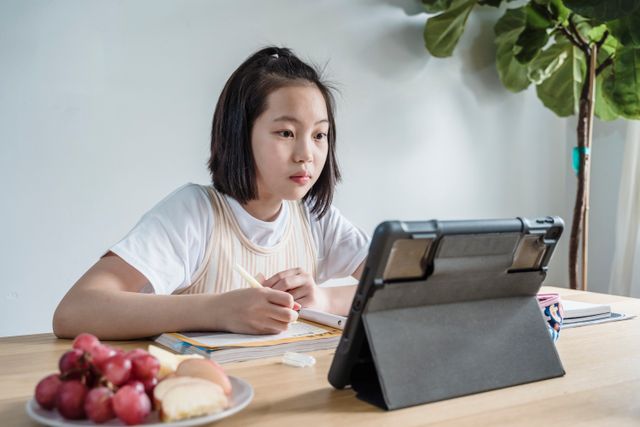
LOS ANGELES, October 24, 2026 – Imagine a classroom where real student ownership is taking place, with a teenager at one end of the class working out a three-week plan for his research project on environmental policies, and two students at another end performing a diagnostic test on algebraic functions. It is clearly visible that the classroom is becoming decentralized.
Obviously, such a scenario brings along the lingering concern of schools and parents regarding the fate of teachers if students are becoming responsible for their own education.
In fact, it’s the reverse. As noted by education leaders Tyler Thigpen and George Philhower, quality self-directed learning sets higher standards for teachers than lowering them. Empowering learners doesn’t mean giving away control, but finding the balance on an intricate continuum of control.
To make the analogy clear, consider how the process looks in modern medicine. If a patient monitors his or her health indicators and asks more insightful questions, the doctor is not going anywhere. In the case of education, the role of a doctor will shift, but when there is a problem, medical diagnosis is needed even more.
In the classroom, the video may provide knowledge, but it can’t reveal the root cause of difficulties. Modern educational expertise is diagnostic at its core. An experienced teacher sees exactly where the student’s thought process breaks down, determines the misconception that lies behind it, and decides to intervene with direct instruction or withdraw depending on the situation.
That is a rather difficult task. One child may be prepared to choose his/her own materials and set his/her own deadlines, whereas another child seated right next to him will require direct guidance each day before he feels confident. While treating all children equally is easy administratively, it fails to fulfil the purpose of contemporary pedagogy, which is to identify what each particular learner needs.
This is important because the purpose of public schooling is to educate every child, not just those who come prepared and confident and ready for autonomy. It can’t be a privilege for only a chosen few, nor can it mean that all learners are thrown into complete autonomy and see what happens. Students cannot be held responsible for what they cannot see.
Teachers ensure that progress is visible through the setting of benchmarks, modeling of skills, and the creation of feedback loops. Contrary to what is often assumed, learner autonomy does not result in the absence of adult guidance; rather, autonomy requires the role of teacher to become one of coach, diagnostician, and instructional designer of helpful constraints.
The genuine potential of contemporary education lies not in deciding between strict adult domination and total learner freedom. Rather, it lies in creating intentional classrooms where learner agency grows along with expert practice.