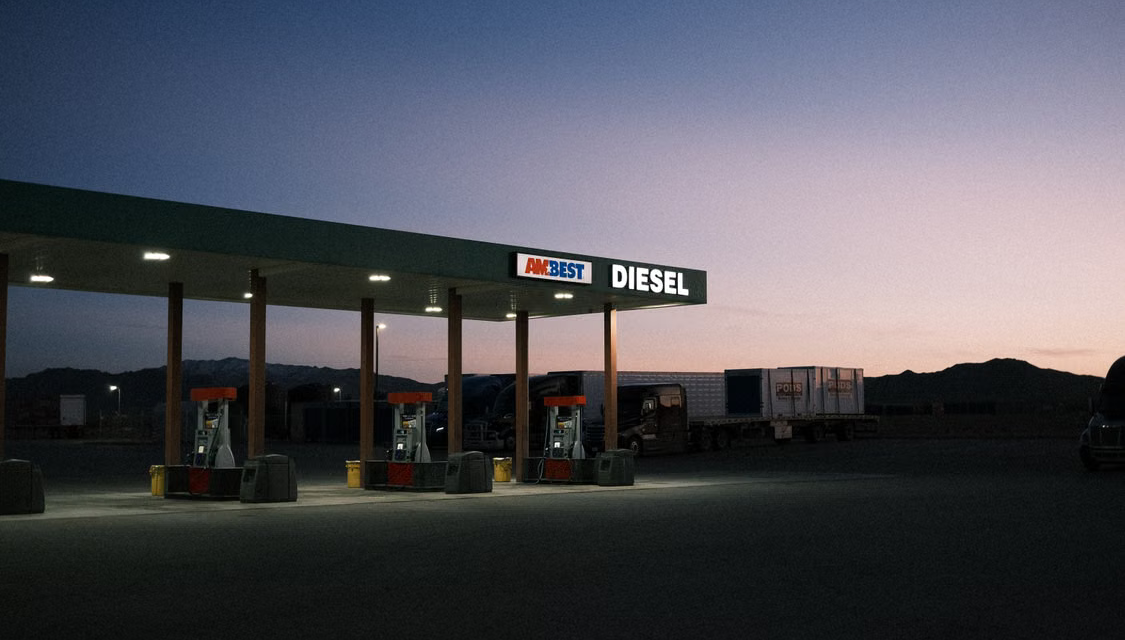
LOS ANGELES, California, September 4, 2026 — U.S. diesel prices reach a historic high Thursday as the global supply crunch intensifies And, according to fuel tracker GasBuddy, the national average was $5.820 a gallon. That amount exceeded the June 2022 record of $5.819.
It is a milestone reached in months of steady rises fuelled by competing global crises. Analysts say this current run has exceeded the shock after Russia’s invasion of Ukraine. Thus far, truckers and farmers are tweaking budgets to manage the higher fuel expenses.
A Rally Driven by Two Wars
Escalating tensions between the U.S. and Iran have shaken global distillate markets since late February. Ukrainian raids against Russian refineries have also put further strain on supplies of diesel from a key supplier. U.S. diesel prices, meanwhile, are 55% higher since the start of the U.S.-Israeli war on Iran.
After significant relief, average prices have remained above $5 a shot since mid-July. It is on track to be the worst year for diesel prices in history, according to GasBuddy analyst Patrick De Haan. The U.S. Energy Information Administration, a federal statistical agency, tracks historical data on fuel prices.
The Gulf’s Outsized Role
Before the war, about 900,000 barrels of diesel and 350,000 barrels of jet fuel transited through the Persian Gulf each day. That volume accounted for roughly 10% and 20% of total global seaborne supply. Vortexa, a cargo-tracking firm, has tracked the disruption’s impact on such shipping lanes.
The diesel crack spread — a measure of refining profitability — has soared to multiyear highs amid the tightness. “The increase in the cost of fuel results in higher costs throughout transportation and manufacturing,” Lipow Oil Associates President Andy Lipow told a Houston radio outlet. Those higher costs, in the end, may be passed on to consumers across the country through increased food prices.
The disruption is monitored by the International Energy Agency, an intergovernmental energy organization that keeps track of conditions in the global oil market. OPEC is monitoring changes in supply at key producing and consuming regions around the world. In a note published last month, it flagged the Gulf disruption as one of the major downside risks to global fuels markets.
Seasonal Demand Could Add Pressure
Industry experts warn that diesel prices may rise further as harvest season approaches. Farmers throughout the Northern Hemisphere will soon have to increase fuel usage. Southern Hemisphere farmers will start greatly increasing diesel usage in preparation for planting season.
Even without geopolitical disruptions on top, that seasonal overlap usually tightens diesel supplies. The U.S. Department of Agriculture collates agricultural fuel demand data, which also tracks national farm input costs. With the wartime supply shortage on top of that, officials see little relief at the pump in the near term.
Broader Economic Ripple Effects
American trucking, agriculture and heavy industrial equipment mostly run on diesel. Cost increases in those areas usually get passed on to consumers in the form of price inflation. The trends in diesel are being watched by economists as an early signal reinforcing the inflation charge over a wide front.
The Fed has not indicated yet how lasting gasoline inflation may play into interest rate decisions. High diesel prices well into the future, they argued, would hit rural and low-income households disproportionately hard. For the time being, there is no obvious end to the supply crunch for US drivers and shippers.
Federal relief measures to alleviate rising operational costs have also been requested by trucking industry groups. Others will talk of temporarily suspending fuel taxes like they attempted in previous surges. As of Thursday when the record price was set, no such legislation had made it past Congress.
Trends in consumer fuel costs, and their impact on household budgets, are examined by the Bureau of Labor Statistics — the federal agency that tracks inflation data. Indirectly, diesel is taken into account in the broader Consumer Price Index via freight and food costs. Such analysis of this week’s record price has not been formally published by economists there as yet.