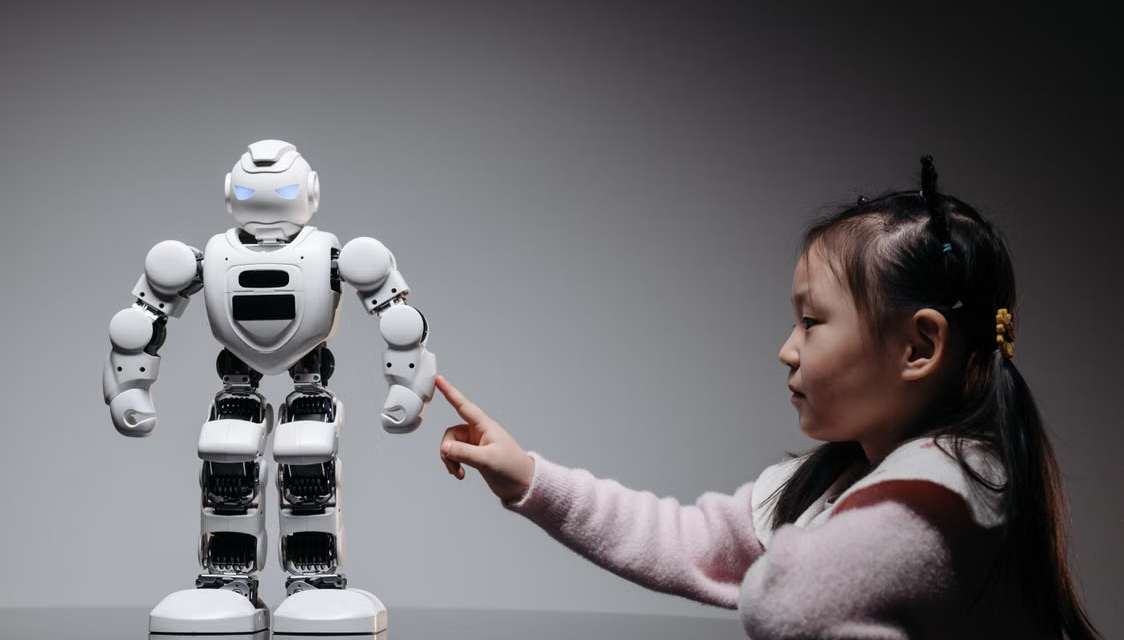
LOS ANGELES, California, August 5, 2026 — Artificial intelligence is walking right through the front doors of Southern California schools as they reopen for the year — but not every parent likes it.
Research from the Center for Democracy & Technology found that 85% of teachers and 86% of students nationwide interacted with AI at least once last school year. Such a level of adoption makes it hard for schools to ignore. But it hasn’t been translated into comfort across the board.
Anya Meksin, a parent and deputy director of Schools Beyond Screens —a Los Angeles–based coalition that has grown into a national network of parents and teachers advocating for safer classroom tech— said “I actually think AI in schools is at the level where it should be considered a public health emergency.”
The group cites some recent cautions from watchdog groups. Last month, Common Sense Media flagged off the AI built into Google’s search engine as an “unacceptable risk” for kids—as one that neither schools nor parents can easily turn off.
Meksin asked: “Are we going to nurture our kids and give them the opportunity, as we did, for a fully human consciousness — or are we going to destroy them so that their dreams never come true in full?”
Los Angeles Unified already bans students younger than 13 from accessing AI tools. Now a district resolution calls for new guidelines, but opinions on what that update should look like depend on whom you ask.
Long-time visual arts teacher Arturo Romo adopts a calmer perspective. He said the appropriate response to a technology this complex — and hard, with lots of people playing — is not panic.
Romo said: “I don’t think we should be fearful of it, I think that is only going to cause us to overreact and make bad decisions in relation to it.” He prohibits students from generating images in his own classroom but is more interested in a different question. “What really works for students? And I think that must be the core of what we wonder.
The issue with AI for Romo is less about the tech than what districts will pay to use it. Each dollar going to AI contracts, he said, is a dollar not being spent on counselors or smaller class sizes, things he says are more clearly connected with student success. More troubling, he thinks chatbots could interpose between teachers and pupils in ways that count.
We talk about “What do you believe in the world? what you would like to see in the future,” he said. The word puzzle is a bit awkward, and the last sentence feels very forced, but please respond to what you think about key issues that matter in your life. Like that certainly isn’t going to come from a bot, right? It’s going to come from you.”
Although they come to that point from differing places, Meksin and Romo end up in the same boat: parents, teachers and students all deserve a greater say over how LAUSD implements AI.
“That’s the whole point of education,” Meksin added, “to wrestle with this and acquire those hard-won critical thinking and analytical skills.”
With school districts nationwide still hammering out policies on classroom AI amid a high-stakes debate over the promise and perils of the technology, here is what you need to know as of Aug. 5, 2026.
Education specialists generally concur that artificial intelligence (AI) can enhance lesson planning, tutoring and accessibility, and improve administrative efficiencies when used cautiously while also giving rise to legitimate issues around protecting student privacy, academic integrity, misinformation, bias and excessive screen time.
As a result, many Districts are taking a slow approach by creating age-appropriate policies, to train teachers and implement safeguards which marry educational innovation with student well-being. This debate in Los Angeles is part of a larger national conversation over the extent to which AI ought to be used in K-12 education, and how to allow for critical thinking, human interaction, and access to equitable learning.
Los Angeles Unified School District would not consent to an interview on the report when contacted by CBS Los Angeles. As it stands, the district’s under-13 ban is in place, and broader parameters are still a work in progress.
Featured Photo by AI