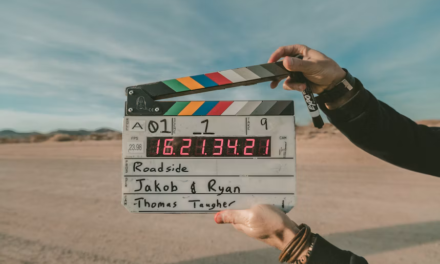
LOS ANGELES, September 9, 2026 – Gaudette went through the envelope. Through the stage. Through the clock. It happened on Sunday, Sept. 6, 2026. His first short movie, A Face Only A Mother Could Love, won the Reply AI Film Festival 2026, wrapping up a Venice evening that seemed to be a film festival combined with some kind of technology presentation.
This year’s award, delivered during a special event organized by Reply and Mastercard in the Match Point Arena on Lido Island, includes an €8,000 Grand Prize, as well as attention drawn to the changes that generative tools make in indie filmmaking. Over 3,100 films from all over the world were submitted; an international jury, headed by Gabriele Salvatores, Oscar-winning film director, selected 10 finalists, out of which the winner was chosen.
The hook is that the movie was made using AI from start to finish. To realize his script, Gaudette used the assistance of Grok, Nano Banana and Seedance – a shortcut, as he has described it, necessary for a project without a budget, cast or crew. Marcel is the main character who is a lonely dancer from Paris who was born with a facial deformity, and his routine is disturbed by a woman who talks to him after many years of observing him in the park.
Jury members, consisting of Rob Minkoff, Catherine Hardwicke, Christina Lee Storm, Brian Welk, and technology experts from Reply and the International Telecommunication Union, recognized the following attributes of the movie and the “thoughtful use of AI throughout the creative process, from writing to post-production.” But this is a bar which keeps rising. After six hours of watching gen-AI shorts, one of the jurors observed that what sets those movies apart was not only their use of AI but how it actually solved certain issues and told us a human story.
And that’s what counts because the film festival is no mere sideshow. This is now its third year, and the Reply AI Film Festival has proven itself a place for filmmakers to try out their theories about whether an AI-driven production model can draw audiences and distributors while not busting budgets. Even a new company called Nolia Studios was formed to support such films this summer.
It would be foolish to think everything is suddenly going to be easy. Questions surrounding copyright issues, likeness rights, and job displacement continue unabated; they’ve just been buried in the small print of submission policies and distribution agreements. Yet the Venice victory suggests that, when all is said and done, skill wins the day.
As for fall TV, things have begun in earnest as the industry prepares for the annual Primetime Emmy Awards. The 78th Primetime Emmys ceremony airs live on NBC, Monday, Sept. 14 at 8 p.m. ET/5 p.m. PT, streaming on Peacock. Pre-shows on the red carpet start earlier in the day; E!’s pre-show begins at 5 p.m. ET/2 p.m. PT, while CNN and Variety have a separate red-carpet pre-show. Hosted by Mariska Hargitay.
It’s an interesting comparison. On one hand, in Venice, a micro-budget short about AI wins top prize for its ability to leverage the latest technology to tell a personal tale. Meanwhile, in Los Angeles, the industry celebrates its old ways – writing rooms, union crews, post-production work for months on end, despite AI technologies entering the pipeline from development through VFX and marketing. It’s not one thing or another anymore. It’s both.
What comes next then? For Gaudette, the victory is only the beginning — evidence that a first outing can hold its own on the world stage without the benefit of a production pipeline. For the TV industry, the upcoming Emmy broadcast will set the agenda for premiere night in the fall and, through osmosis, the conversation around innovation in a year where “AI” is both a buzzword and a flashpoint.
One thing is certain: the technology exists. The real question is not whether it’ll transform the medium, but whether those responsible for creating it will have any voice in how the transformation is remunerated.