LOS ANGELES, September 27, 2026 – When a major cloud provider suffers an outage, the chaos doesn’t stay trapped inside a remote data center. It hits immediately and everywhere.
Flight boards freeze, payment processors drop offline, and hospital triage systems go dark—all within seconds.
This represents an ominous paradox within the heart of the American economy. Technology is no longer just a hot sector of the economy providing well-paying employment and exports. It’s also the technological base upon which nearly every other industry operates within the United States.
Data from the Information Technology and Innovation Foundation shows the digital economy contributes more than 10 percent to America’s gross domestic product. However, mere percentages do not represent the true problem; the issue of single points of failure exists when all industries are managed by the same software stack.
And this matters because scale breeds a false sense of security.
“We’ve built an incredible economic engine,” noted one risk analyst during an industry summit earlier this year, “and then we wired the entire global supply chain directly to its main fuse box.”
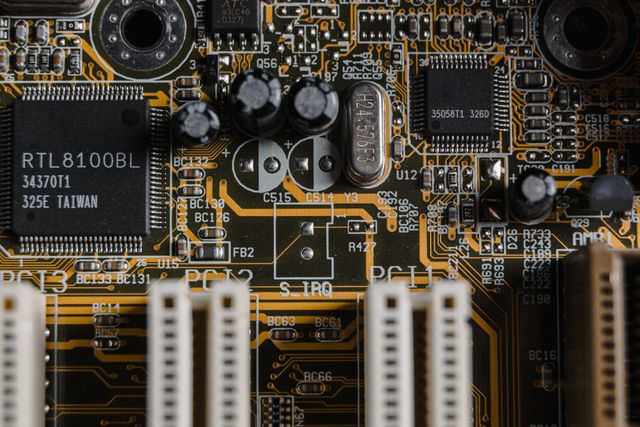
This vulnerability is nowhere better illustrated than in the manufacturing of microchips. According to an analysis by the Council on Foreign Relations, Taiwan manufactures almost 90 percent of all advanced semiconductors globally. The slightest occurrence of either war or natural calamity in the area could immediately cripple the global manufacturing of everything from automobiles and equipment to AI and defense.
While Washington yearns for technological independence, relocating advanced manufacturing is proving costly and time-consuming.
The matter of hardware isn’t the only one worth considering. With the increasing use of AI in business activities, numerous threats connected with data privacy, biases, and automation emerge. In order to address this issue, NIST developed an AI Risk Management Framework.
So where does that leave us?
Dominance shouldn’t be confused with invulnerability. It takes true diversification to defend this citadel, through the growth of local chip factories, cloud redundancy backups, and technical training investments.
Risk cannot be entirely eradicated. However, with ever-increasing dependency on digital structures, it is no longer an option—it’s survival—to reinforce these vital systems before the next shutdown.