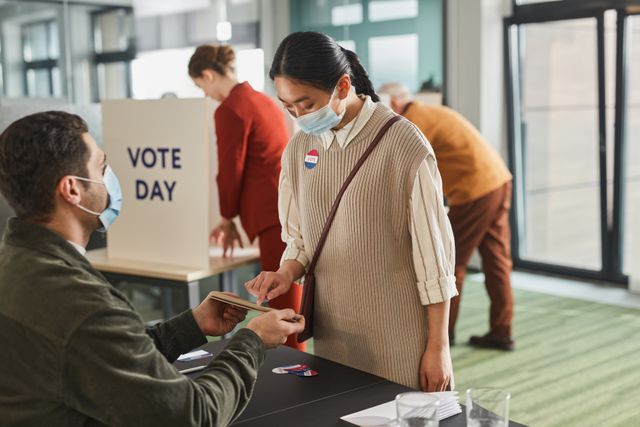
LOS ANGELES, September 27, 2026 – Picture a primary election in mid-summer. The polling place is open, the ballot is important, and turnout is still a fraction of what it will be in November.
This is no small idiosyncrasy of U.S. politics. According to the Bipartisan Policy Center, 21.3% of those eligible to do so voted in the 2022 midterms’ primary election. That means that four out of every five eligible voters skipped voting in races that select candidates for the general elections.
Primary voters are not necessarily extremists. They are also not ideologically cohesive. However, they are usually more politically active and have more motivation from the race itself than the citizens who don’t go to vote. This is well known to the candidates who need to win. For survival, they speak to the voters first.
This makes ideological purity seem safer than compromise. An offensive attack gets noticed. The complex proposal of a candidate may not. The silent majority in the middle of the political spectrum is engaged in the process after nominations have been decided.
And that’s how polarization becomes part of the machinery.
Ranked-choice voting will not bring about agreement between Americans; its potential is rather to be found in its ability to alter what candidates have to do to get elected, and that means building coalitions rather than targeting ideological primary voters exclusively.
With ranked-choice voting, voters list candidates in order of preference. Should none of the candidates receive a majority of the votes in the first round, then the least successful candidate is dropped out, and his ballots are allocated to other choices of the voters.
The mechanics are simple. The incentives are not.
A candidate who requires second and third choice votes will have fewer incentives to burn all bridges. The personal attacks will certainly continue, as they are part of the political process, but the scorched earth approach may come back to bite the candidate. In case a candidate insults his opponent’s supporters, he risks that those voters will not put him higher on their list.
This gives an incentive for competition to take place outside the typical political arena. According to FairVote’s review of academic literature and actual elections, ranked choice voting may lead to candidates seeking greater appeal among voters and using less hostile rhetoric. However, FairVote recognizes that RCV does not solve the problem of polarization.
Such a caveat needs to stay at the forefront. Amending the ballot alone will not be enough to address partisan media, gerrymandering, legislative logjam, or the duopoly that makes the election an apocalyptic struggle.
The facts of racial polarization provide further reason for skepticism. In their study for New America, political scientists Yuki Atusaka and Theodore Landsman showed that ranked-choice voting did not seem to lower racially polarized voting within the broader electorate. In fact, there was no sign that it increased racial polarization either. It is not a success story or a failure; it is a cautionary tale not to make claims not supported by evidence.
Nor does ranked-choice voting guarantee stronger minority representation or eliminate every concern about voter confusion. Reformers should make those claims only when supported by specific local evidence.
However, the electoral laws affect the political process. In fact, Maine, Alaska, as well as some other local governments, apply the ranked-choice voting system, which is worth studying by voters, officials, and academics.
It is unlikely that polarization in the United States will reduce as a result of ranking three names instead of selecting one. However, when the candidates need the support of more people, they have a motivation to do so other than paying attention to the most vocal segment of their alliance.
In the case when the system punishes those who show the least outrage, there is nothing unusual in the fact that outrage prevails. The one which makes the alliances effective could motivate politicians to change something.
That will not make politics gentle. It might make governing possible.