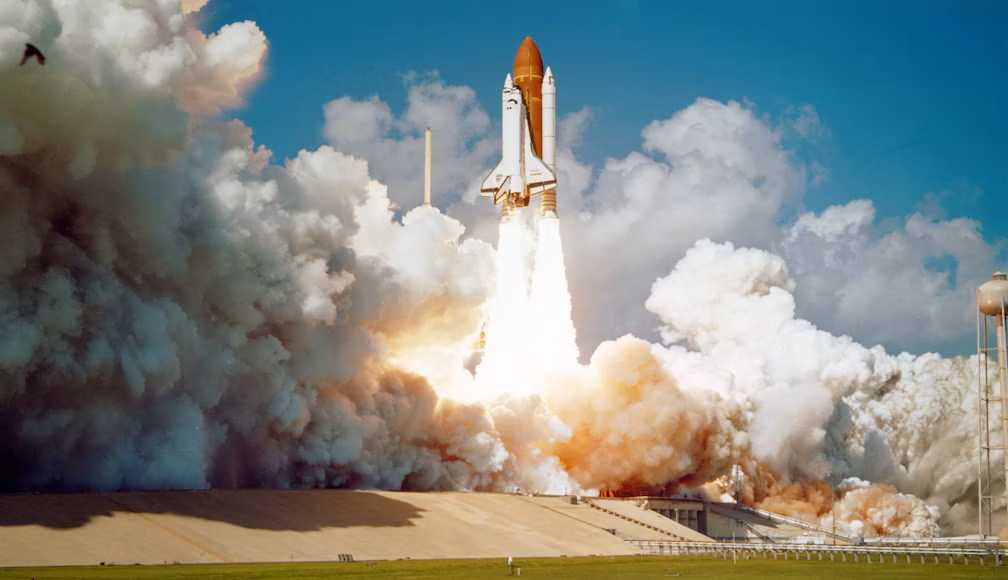
LOS ANGELES, California, October 1, 2026 — Launch of NASA and SpaceX’s Crew-13 mission to the International Space Station from Cape Canaveral is set for Thursday morning. They will live aboard the station for six months, during which time four astronauts will ride a Falcon 9 rocket and Dragon capsule to arrive at the orbiting science lab. The launch comes on the heels of a Flight Readiness Review in which the team successfully cleared itself to proceed after earlier delays.
A Crew Representing Four Nations
The mission will be commanded by NASA astronaut Jessica Watkins with pilot Luke Delaney, with both preparing to fill their flight evaluation roles on the Station. The four-crew includes Canadian Space Agency astronaut Joshua Kutryk and Roscosmos cosmonaut Sergey Teteryatnikov. Watkins will mark the first NASA astronaut to fly twice on Crew Dragon.
While the mission is part of NASA’s ongoing partnership with SpaceX to transport astronauts, it falls under the agency’s Commercial Crew Program. Prior to this, spacecraft shouldered a different crew on a private spaceflight mission called Grace. The first stage of this Falcon 9 rocket was used on two previous flights, including the last Crew-12 launch to the station.
Technical Delays Along the Way
A leak found during prelaunch checks for the Dragon spacecraft pushed back the original launch date for the mission. The NASA and SpaceX teams worked for a few weeks to troubleshoot the problem before establishing another date as the target. That restraint is an example of standard safety precautions in every crewed spaceflight.
Mission managers ultimately voted “go” for launch following a detailed review of readiness at Kennedy Space Center. Weather reports offered about a 60% chance of meeting launch conditions. The next day, a backup launch opportunity was available in case of a scrub.
Handover With the Outgoing Crew
Upon docking with the station, Crew-13 will begin a handover period between its members and the departing astronauts from Crew-12. The departing team is due to start its trip back down to Earth soon after the new crew arrives. Where crew schedules overlap, it helps keep our staffing areas and operational knowledge on the orbiting laboratory.
None are to be confused with the International Space Station, where 20 years of continuous human presence has been arranged under an international multilateral agreement. Crew-13 continues that continuous human presence while enabling continuing scientific investigation in microgravity. Scientific experiments planned during the mission cover a wide variety of fields, including biology, materials science and technology demonstrations for future space exploration.
Why the Mission Matters
Crew-13 is the thirteenth operational flight to the ISS through NASA’s Commercial Crew Program, which was established to return domestic human access to low-Earth orbit. That program decreased US dependence on foreign spacecraft to use the space station after the retirement of the fleet of deliberately landable orbital spacecraft (the “space shuttle”). Each mission that works makes that now established system seem reliable.
NASA’s online guest program is open for public registration to follow the launch and will include mission updates and links to resources. The coverage will begin with prelaunch preparations, and liftoff, followed by the scheduled docking a few hours later. Now all eyes are on Florida with just hours to go before the scheduled launch Thursday.
Can likely attract all spaceflight fans occasionally across the country when the countdown lives. Nearby viewing areas around Cape Canaveral are usually packed with spectators hoping to watch the liftoff in person. School groups and scientific organizations alike make frequent use of such launches to teach about space exploration and orbital mechanics.
The crew will have a busy six months, packed with scientific work on board the station. Researchers on the ground will manage experiments from afar, relying on astronauts to perform exact procedures in microgravity. The results of this mission could be utilized in long flights, many years to the Moon and around Mars as detailed by the European Space Agency.
The success of the mission still hinges on international cooperation, with four countries represented in the crew. That partnership has evolved over decades in the framework of the International Space Station program. With Tuesday’s launch day fast approaching, officials from each participating space agency have now endorsed the mission planning and safety preparations for future human spaceflight.