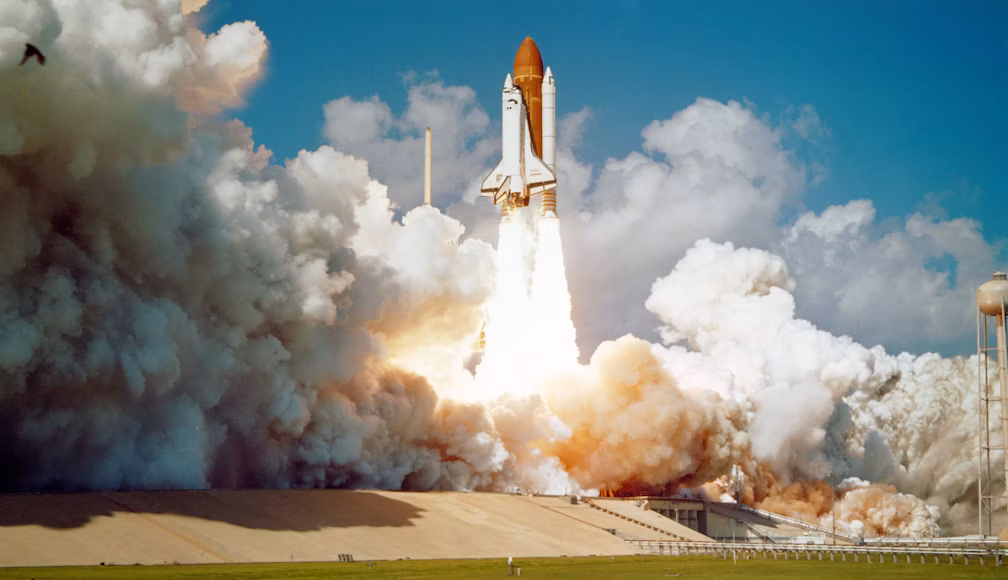
LOS ANGELES, California, September 16, 2026 — NASA launched its Nancy Grace Roman Space Telescope on August 30 by a SpaceX Falcon Heavy rocket. The observatory is now en route toward a stable orbit just under one million miles (1.5 million kilometers) from Earth. Engineers say the total lifespan of the mission could extend much longer than expected once operations officially begin. Direct mission updates and launch coverage are hosted on the official National Aeronautics and Space Administration portal.
The Numbers Are Different Where There Is a Perfect Launch
The main mission would be a five-year run, surveying large portions of the sky in an effort to locate dark energy, dark matter, and distant exoplanets. Before launch, NASA filled the spacecraft with 290 gallons of hydrazine propellant, a fuel to help steer it near the Sun-Earth Lagrange point. Roman’s trajectory, however, was extremely on-target, which officials say will leave Roman needing far fewer course corrections than expected.
And that efficiency translates to a whole lot more fuel in the tank for continued science operations down the road. NASA has also claimed the propellant supply should support at least double its five-year primary mission, pulling total operations to near a decade. Add in the telescope’s last eight countries of development, and officials have recently taken to describing Roman’s overall program timeline as lengthy—over the course of two decades, as worded in a recent advisory.
What the Telescope Will Really Do
The Roman Space Telescope sports a 300-megapixel Wide Field Instrument with a field of view 100 times as large and a resolution equivalent to the Hubble Space Telescope. Its broad perspective enables it to survey the sky about 1,000 times as quickly as Hubble, scanning larger swaths of the sky that would otherwise require years for other telescopes to picture. In core science operations, the telescope is also expected to discover thousands of new exoplanets. Deep space observational research and astronomical data access are curated by the Space Telescope Science Institute.
The mission will also investigate two of the biggest outstanding questions in astrophysics: dark matter and dark energy. The associate administrator for NASA’s Science Mission Directorate, Nicky Fox, referred to Roman as “a discovery machine” before it took flight. Researchers expect that the telescope’s data archives could fill multiple petabytes of data, keeping scientists busy for years after each observation is completed.
From Concept to Launch: A Long Road
The project has its roots in the early 2000s when it was originally called the Wide-Field Infrared Survey Telescope. In fact, years came off of what could have been the timeline after development sped up with hardware NASA quickly adapted from another satellite built for national security. The telescope lifted off nine months earlier than its latest schedule and under a budget of approximately $4 billion.
Roman will sit near the same spot in orbit where the James Webb Space Telescope operates, but each instrument has a different role. Webb offers highly detailed views of smaller patches of sky; Roman provides wide-field images that can identify targets Webb could examine in detail. The partnership is thought to help speed along discoveries over the next few years across both missions. Federal scientific research initiatives are also funded through the National Science Foundation.
What Comes Next for Roman
After traveling to its operating position, the observatory will spend roughly three months commissioning. Instrument calibration will complete in early 2027, at which time NASA anticipates releasing the first science images from the telescope. Full science operations are to come shortly after that milestone date.
Mission planners warn that a formal extended-mission timeline must still pass through future appropriations by NASA management, even with fuel in reserve. Yet even so, the current forecast has scientists hoping that Roman will stay productive at least long enough for some scientists to have a full career. That’s a pattern an agency used to telescopes that outlive their design life is comfortable repeating.
Hubble represents that form (and perhaps the clearest precedent for that pattern) with its launch in 1990, where its mission was meant to last about 15 years. Three decades later, it’s still in active service, going on to generate new science alongside newer observatories. The lifespan could be just as long if hardware continues to behave, scientists studying Roman’s fuel margins say. Spaceflight safety and orbital operations in launch corridors are overseen by the Federal Aviation Administration.
The cost and speed of the telescope have also garnered some attention in the space community. For around $4 billion, Roman amounts to a significant but not superlative investment for one of NASA’s premier missions. Agencies describe coming in under budget and ahead of schedule as a rare feat for such a complex project.
Astronomers not involved with NASA have greeted the news of Roman’s possible extended life expectancy with guarded optimism. For the wider research community, more usable data are available for as long as possible operations windows. To many, the true worth of Roman will only be realized once its wide-field surveys begin yielding science results in the next few years.